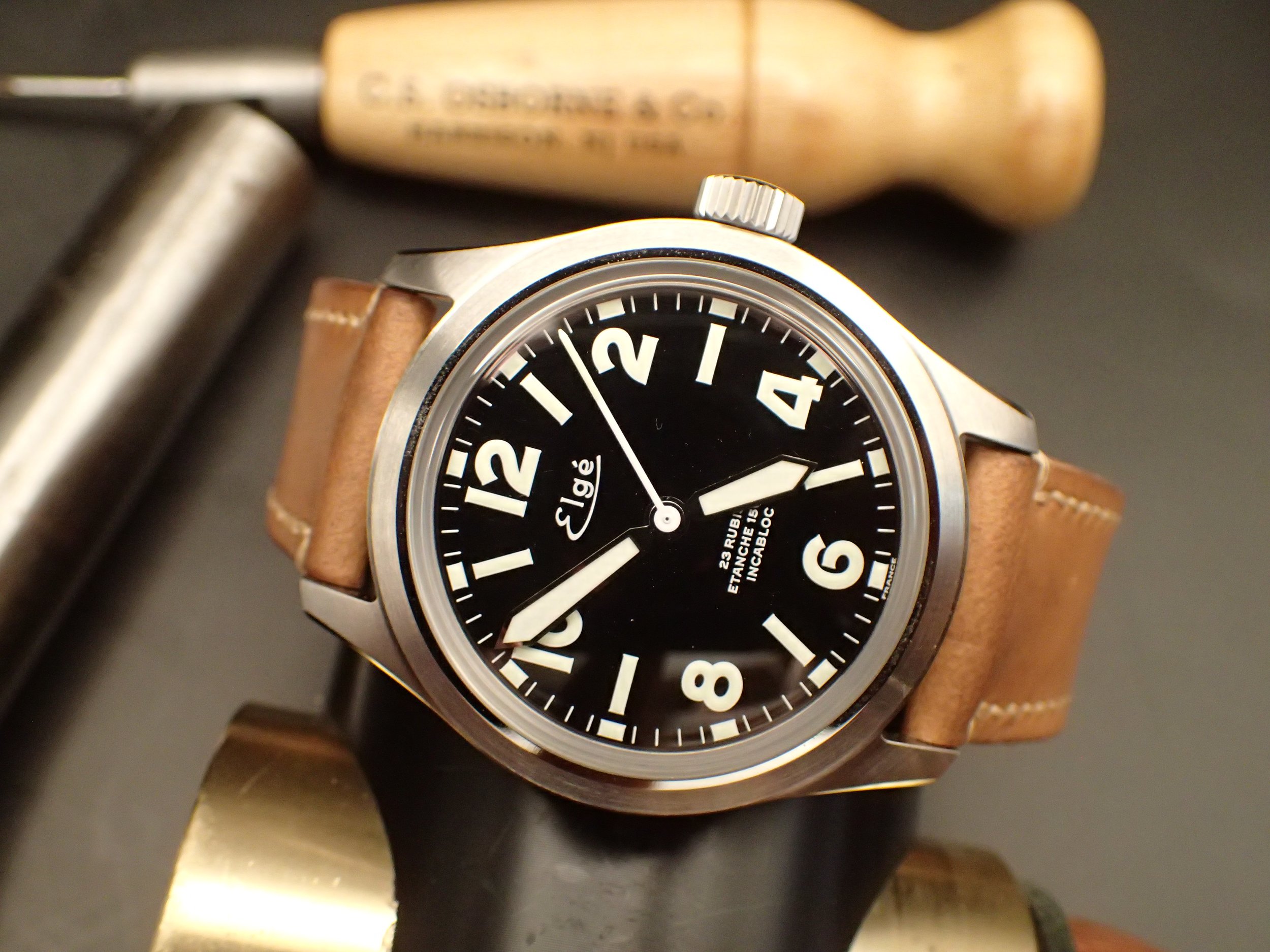
2, 4, 6, 8, What Do We Appreciate? The Elgé Chamonix and the Quest for the Best Even-Numeral Dials
Myron Erickson
The Golden Apex of Watches.
About 20 years ago I bought a vintage chronograph from an estate. I bought the watch directly from the daughter of a collector who had passed away and left a large collection to her. But this isn’t a story of a knowing buyer exploiting an unwitting seller wondering what her father’s Universal Genève Compax Nina Rindt was worth. “What, this old thing? You’d really give me $300 for a wind-up watch?” No, this is a story of an old, crusty looking chronograph from a low-tier French brand that just spoke to me, dumb name and all.
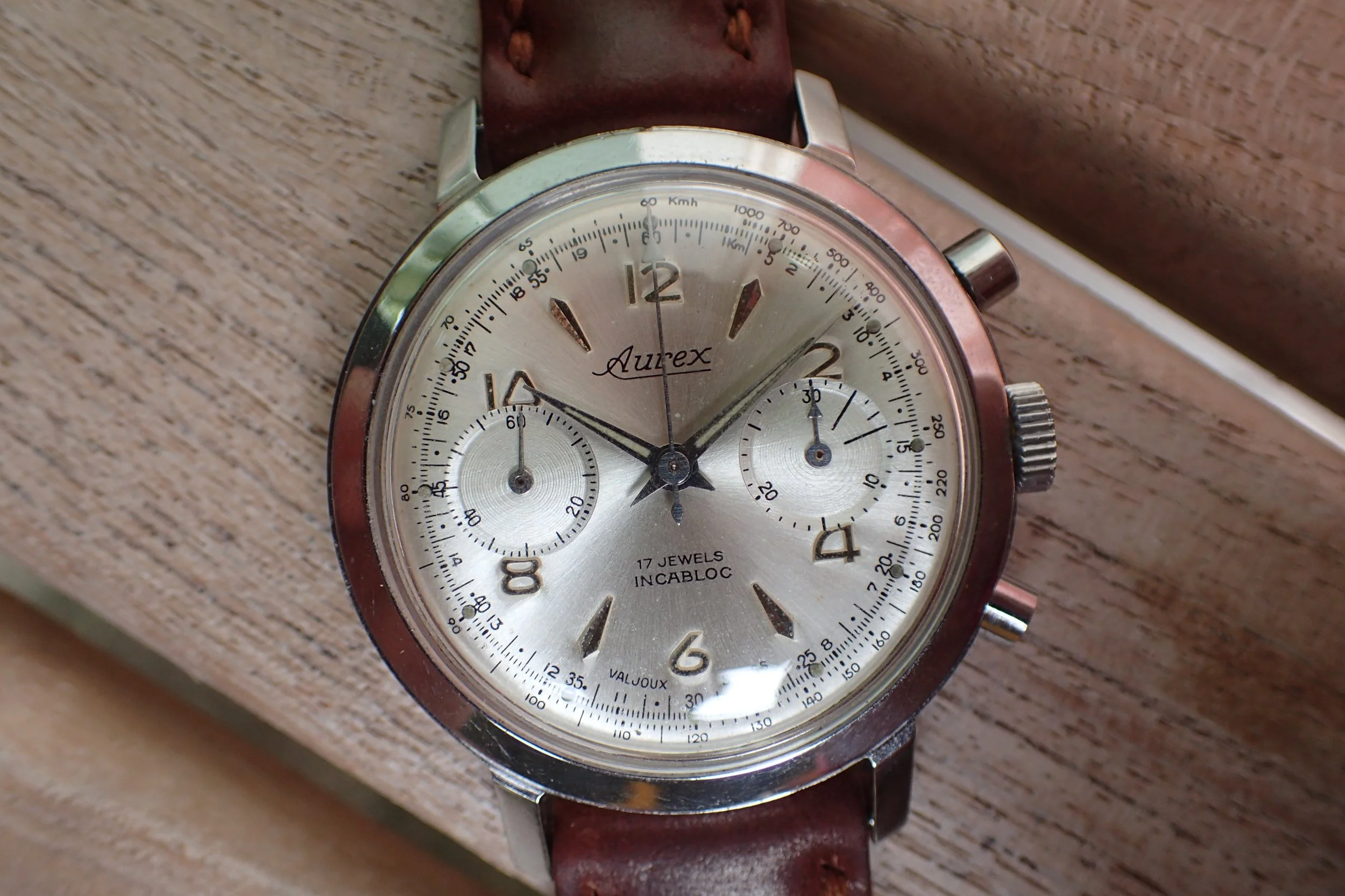
The old Aurex chronograph. Gotta love the triangle zero in the 10.
What grabbed me about the watch was its dial, which uses even numerals in an Art Deco typeface from a maker I’d never heard of called Aurex. All I knew about the watch was that it used a Valjoux 7733, a movement I was familiar and comfortable with. I now know that Aurex was a brand founded in France in 1931, and that many of their pieces used French movements from a long defunct movement maker called France Ébauche. Anyway, the Valjoux 7733 in my Aurex ran fine (at first) and I just really liked the dial. So did my long suffering spouse, it turns out, and shortly after its arrival the watch went into her watch box and became an accessory in the 1st degree to wearing blue.
On the Origin of the Species.
I have to think that even-numeral dials are as old as wristwatches, or maybe came right after people realized that Roman numeral dials were stodgy and unreadable. I could just see the pitch to the board of directors, every one of them no doubt carrying a Roman numeral dialed pocket watch on a chain in his vest. “Smithers down in Dial Design has an idea — says he wants to make the dial readable and uncluttered. He’s proposing even Arabics only. What do you guys think?”
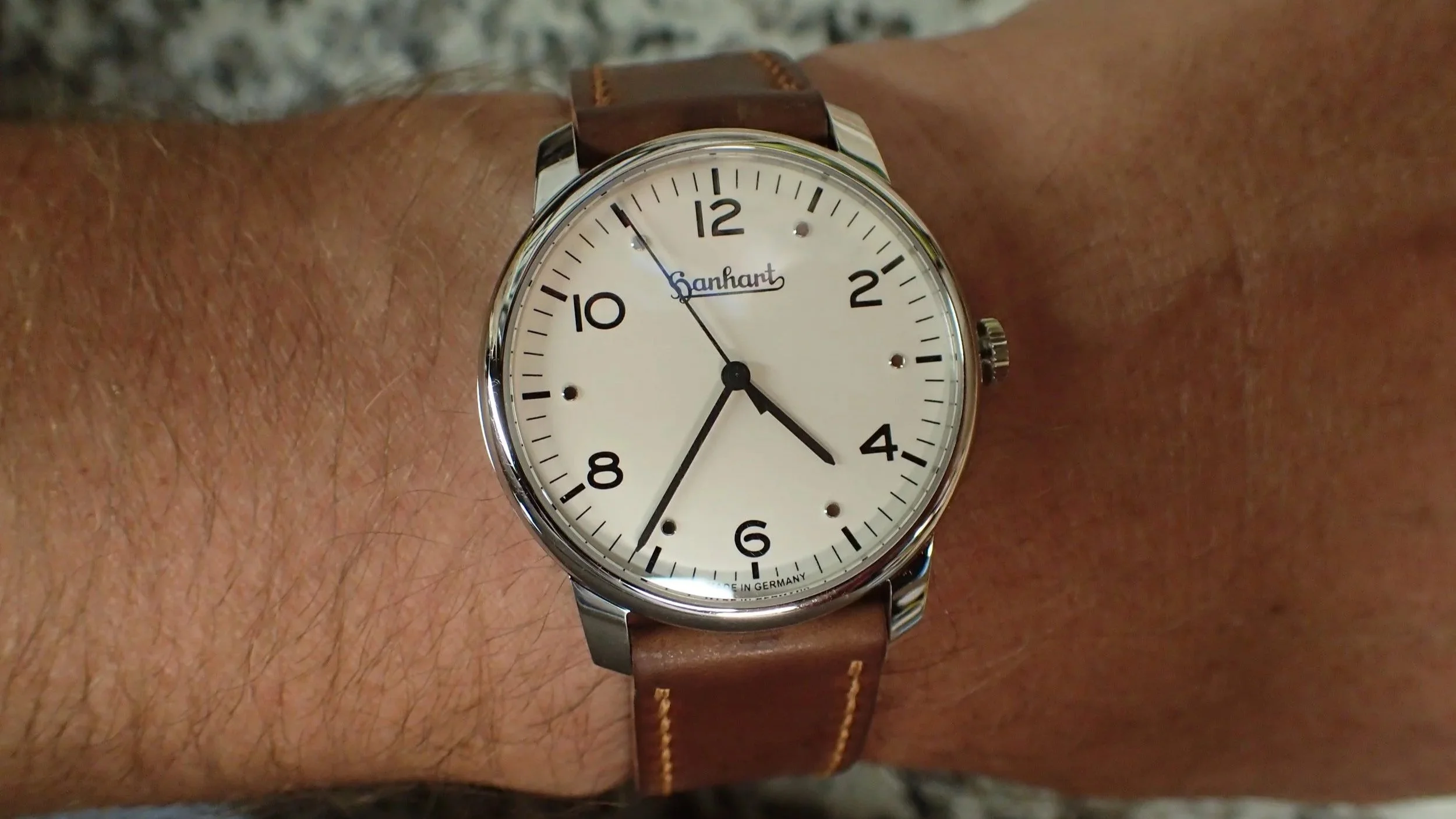
The Hanhart Pioneer Silva.
These earlier watches, those from the 1930’s-40’s, seem to have a definite Art Deco flair to them. Although I’m sure there are older examples, one of my favorites from this era is the Hanhart Kal. 36/39. Ninety years later Hanhart has come back to this design and reproduced it as the Pioneer Silva. Although the Silva pulls to the dressier end of my watch wearing spectrum, I love it.
And the Union Glashütte Noramis chronograph. With its date set into the running seconds register, how can a mere even-numeral-dial-loving mortal resist its perfect, and perfectly funky, layout?
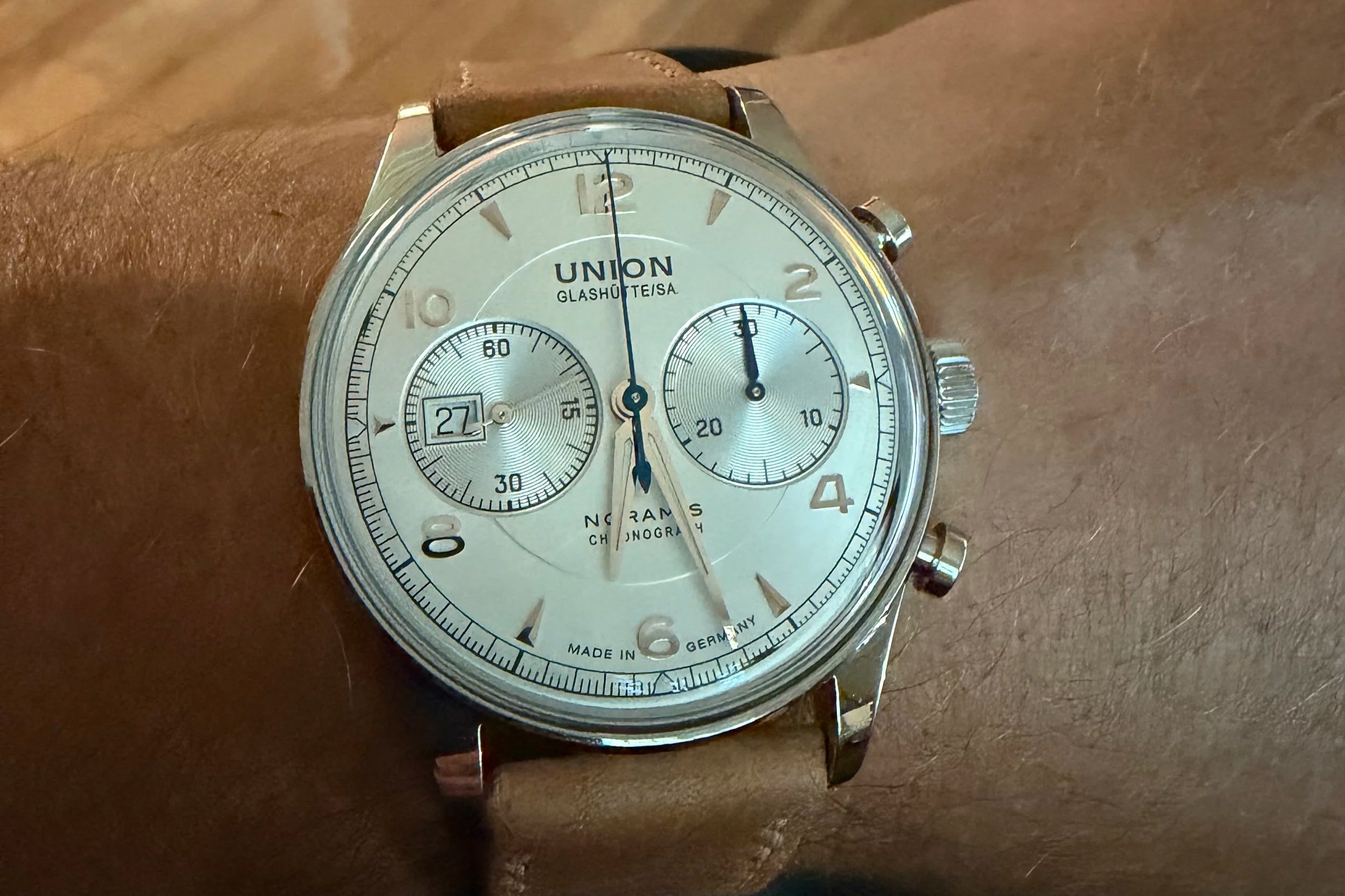
The Union Glashütte Noramis Chronograph. Kinda like the Aurex all grown up.
But the Aurex had sparked something in my Collector Brain, as it kicked off my ongoing passion for even-numeral dials, and all these years later I am now the owner of a nice little collection of them. The latest addition is an Elgé Chamonix, a re-created watch from a rebooted brand using a movement from the also recently re-launched France Ébauche, the FE Auto. I wish I had wonderful things to say about the FE movement in my Elgé, but more on that later. I will say some wonderful things about the rest of the watch, though.
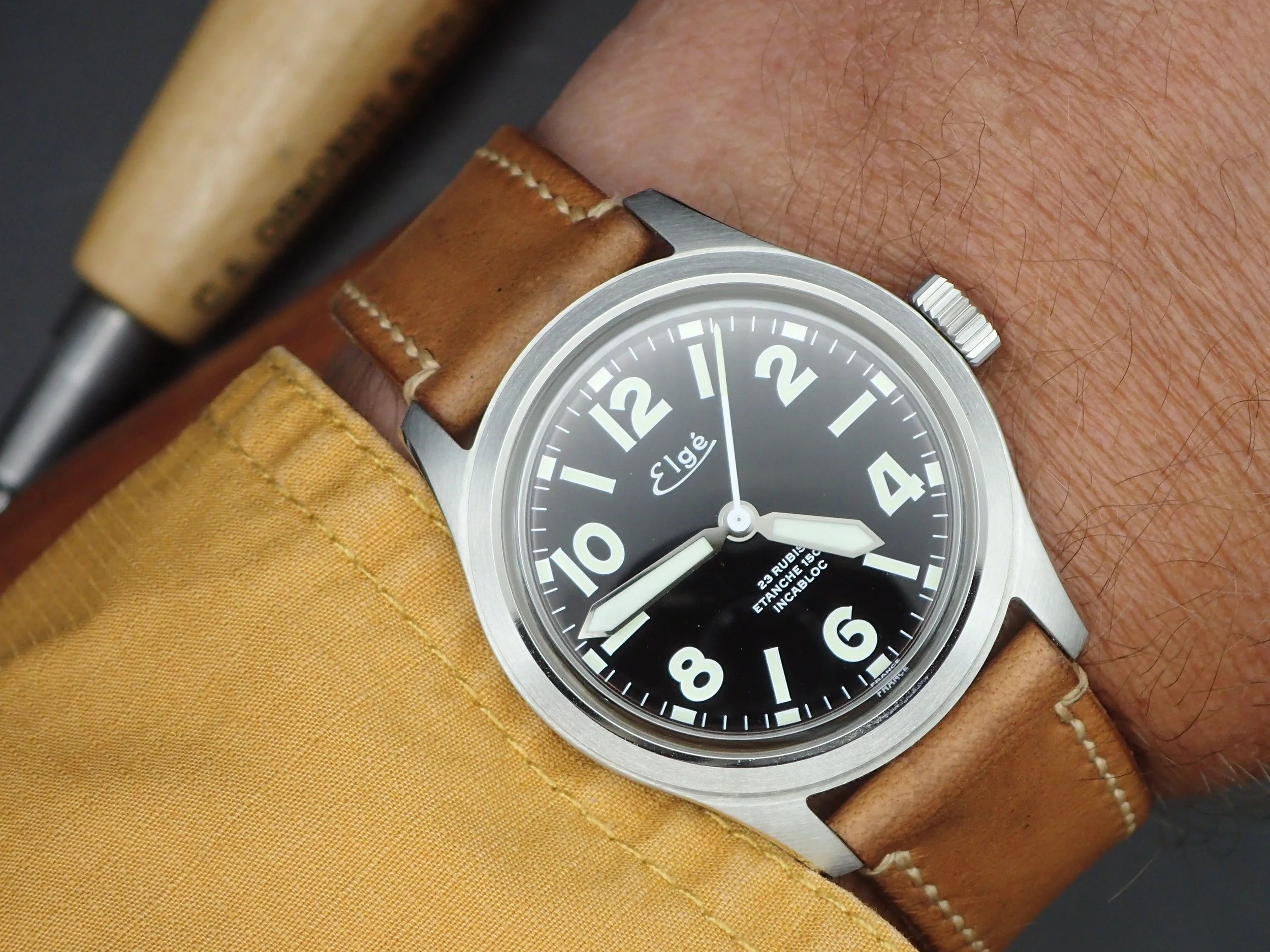
The Elgé Chamonix.
The Classic Mid-Century Even-Numeral Dial.
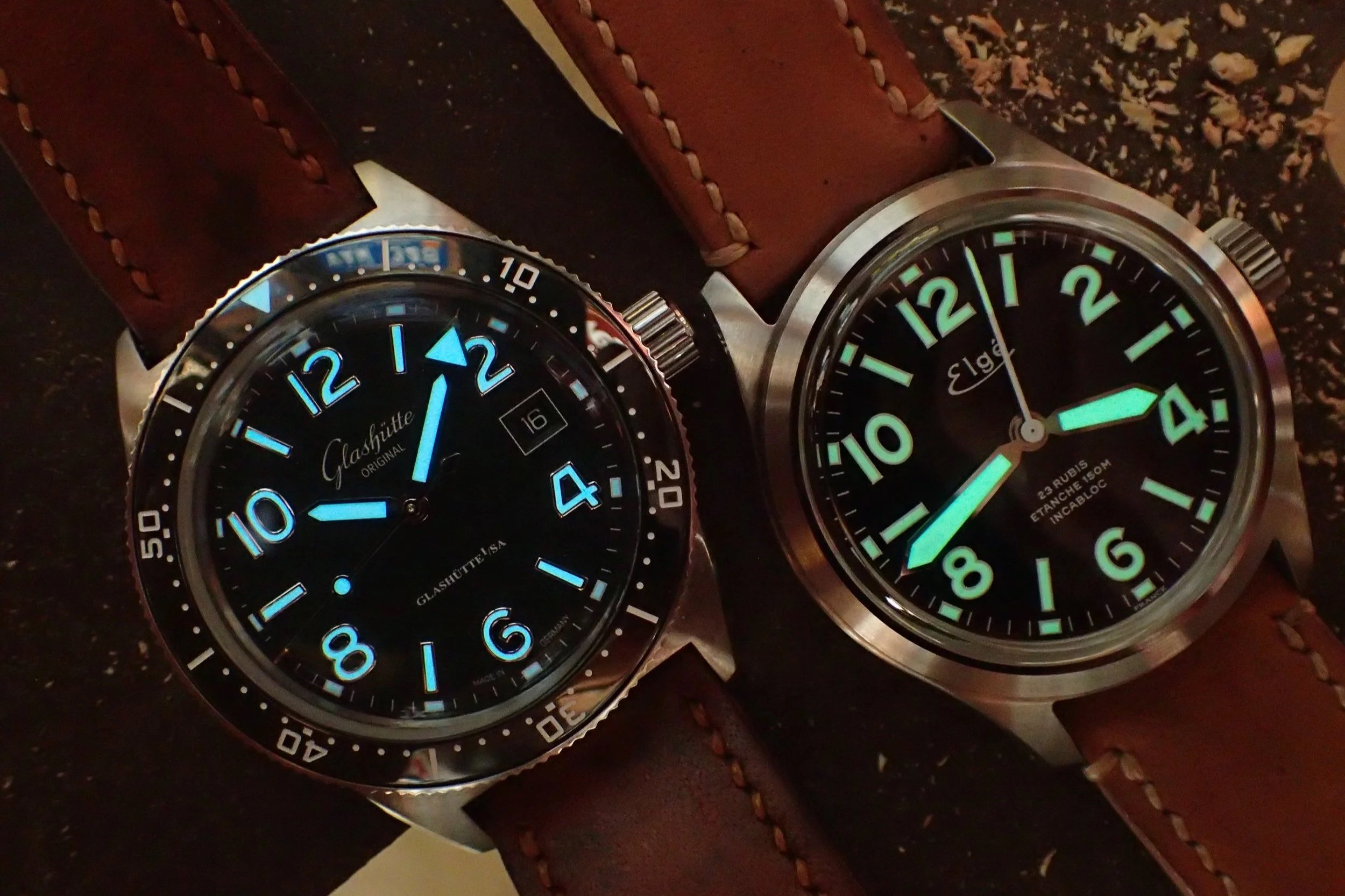
The even-numeral dial surely hit peak popularity in the 1950’s-60’s when skin divers were all the rage. In those days, there were a zillion small watch companies selling small watches built from parts that were made by other small companies. This case, plus this dial, plus this movement, plus this handset, plus a vaguely adventurous-sounding name, equaled skin diver watch sales, which is why no one really seems to know who can claim credit for inventing the iconic even-numeral dialed skin diver. I’ve seen innumerable YouTube watch reviewers calling out Glashütte Original for claiming to have invented it, but they never have. They simply claim credit for re-creating their own parts-bin skin diver from the 1960’s, which today they call the SeaQ. It is a brilliant watch in every regard, which it ought to be given its price.
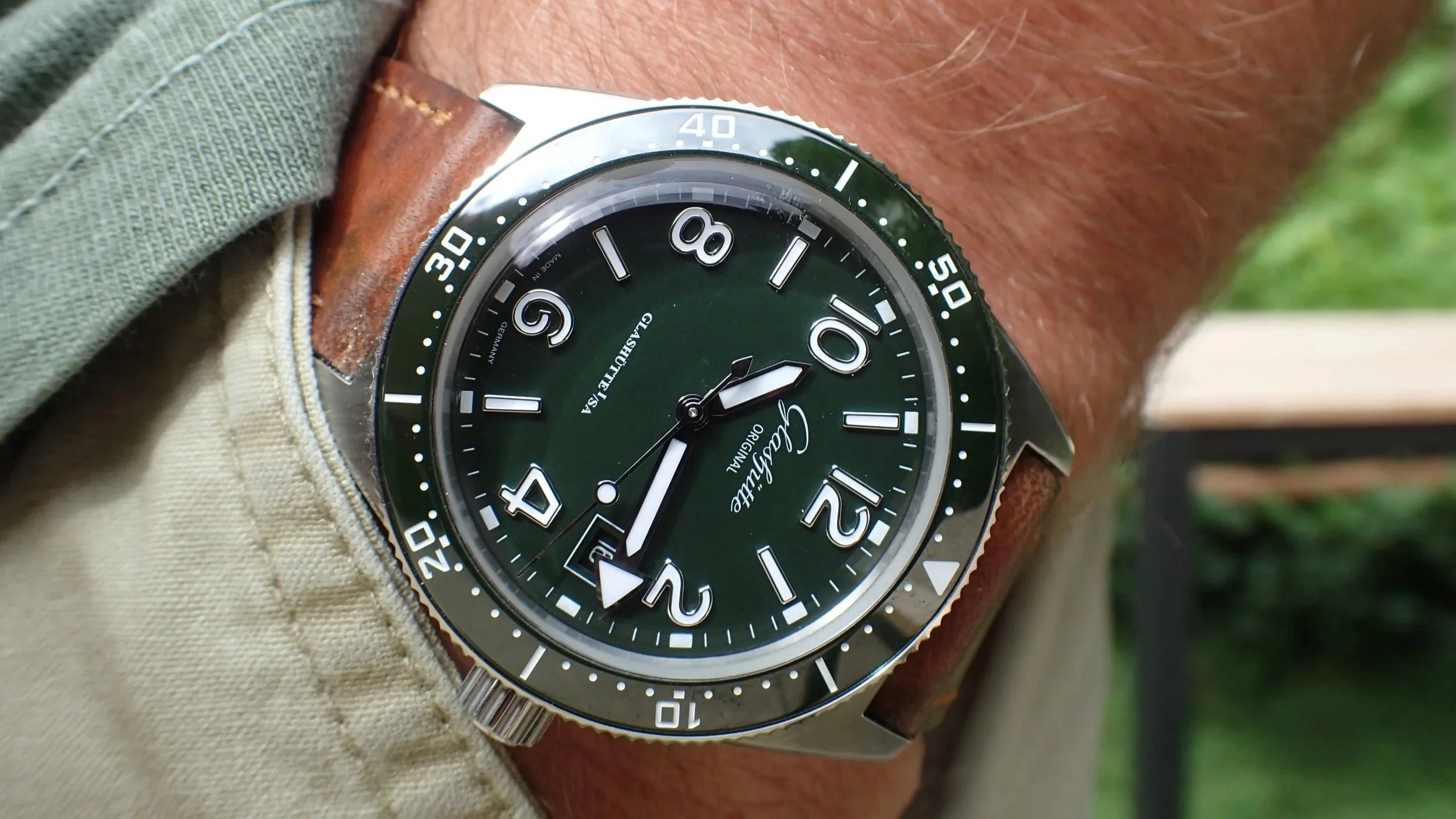
The G.O. SeaQ 39.5. Genuine and authentic, with a price to match.
It’s this style of dial that I find difficult to resist when I encounter it in a modern watch. The Union Glashütte Noramis, the Nomos Club, some Oris Big Crown Pointer Dates, the Tudor 1926, the Vulcain president 50’s, some Frederique Constant Runabouts, the Airain Sous Marine. And, perhaps my favorite, the Vacheron Constantin Fiftysix, a Definitely Hopefully Someday Grail for me.
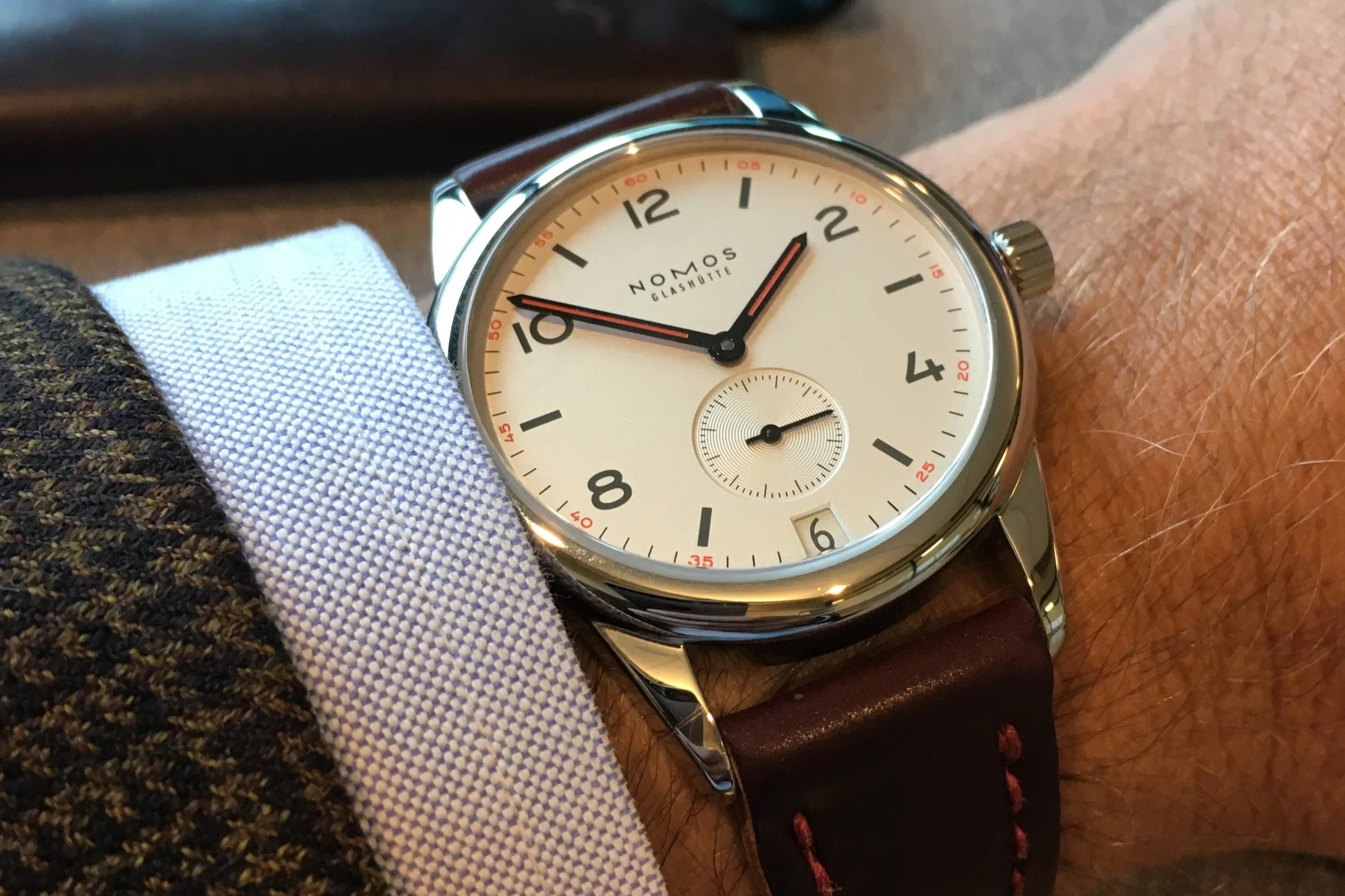
Nomos Club 38 Datum. I’d still have this watch if it had had a quick-set date.
Which brings us to the Elgé Chamonix (pronounced sham uh NEE). The original watch that inspired today’s Chamonix was the field watch equivalent of the parts-bin skin divers. And like a lot of those parts-bin skin divers, it was a relatively diminutive 32 mm. The watch that Elgé is making today is a very nicely proportioned 38 mm, although I find it wears smaller than other nominally 38 mm watches on my own wrist. It has several other modern upgrades as well — sapphire crystal, 20 mm lug width, jumbo crown, hacking 4 Hz movement, 150 m WR, etc. It wears great, is eye-catching, and benefits from overall high build quality. The lusciously finished case is worthy of particular mention.
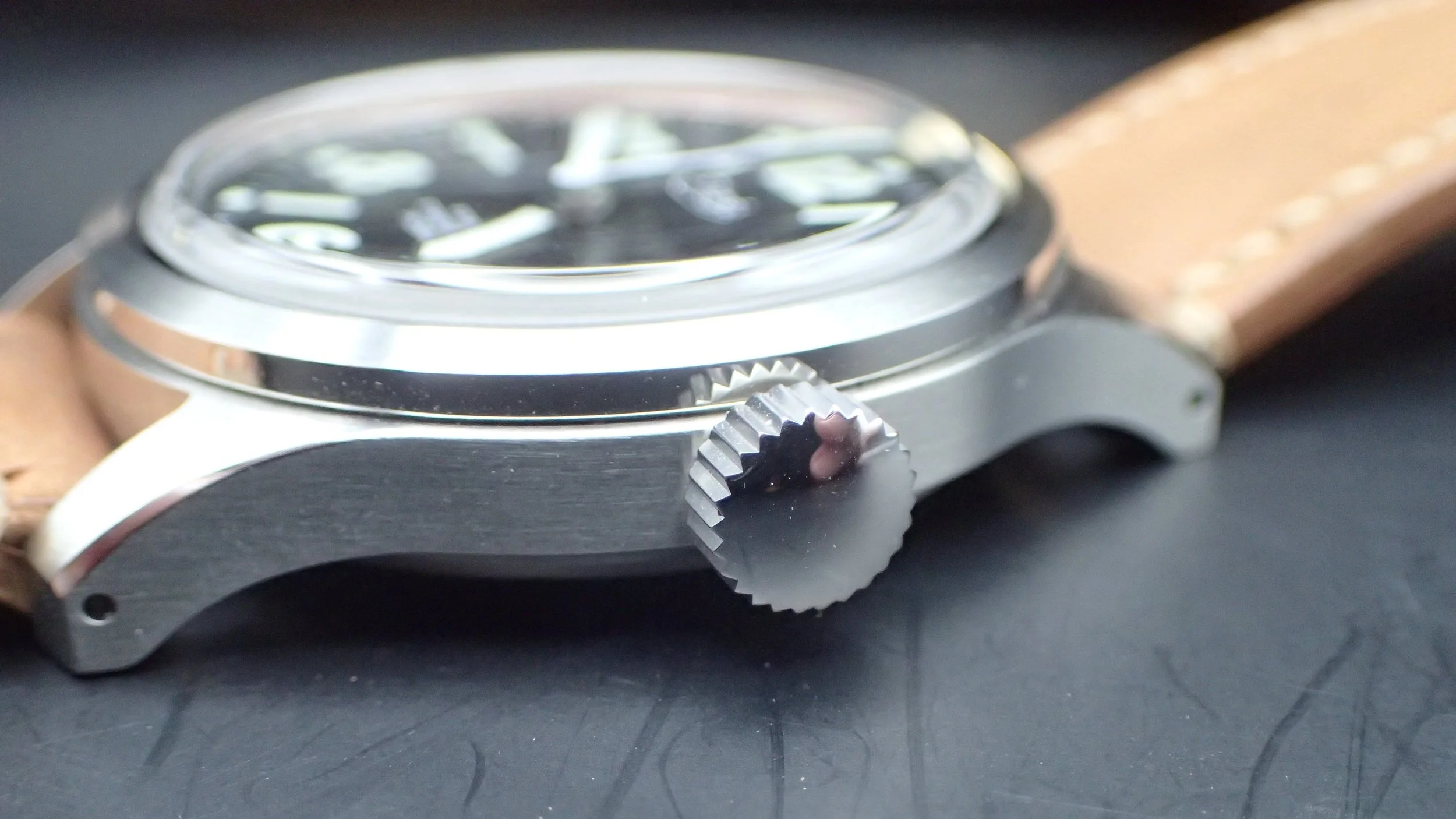
Beautifully finished case details, drilled lugs, and a beefy crown make the Chamonix a pleasure to wear.
And of course, I absolutely adore its even-numeral Mid-Century skin-diver-esque dial and what Elgé calls its “magnum” hands. There must be a ton of luminescent material on the dial and hands, as the thing veritably shines brighter than a harvest moon after dark and through the night, a definite plus if you wear a watch for sleeping, like I imagine the intrepid French mountain climbers of yore did.
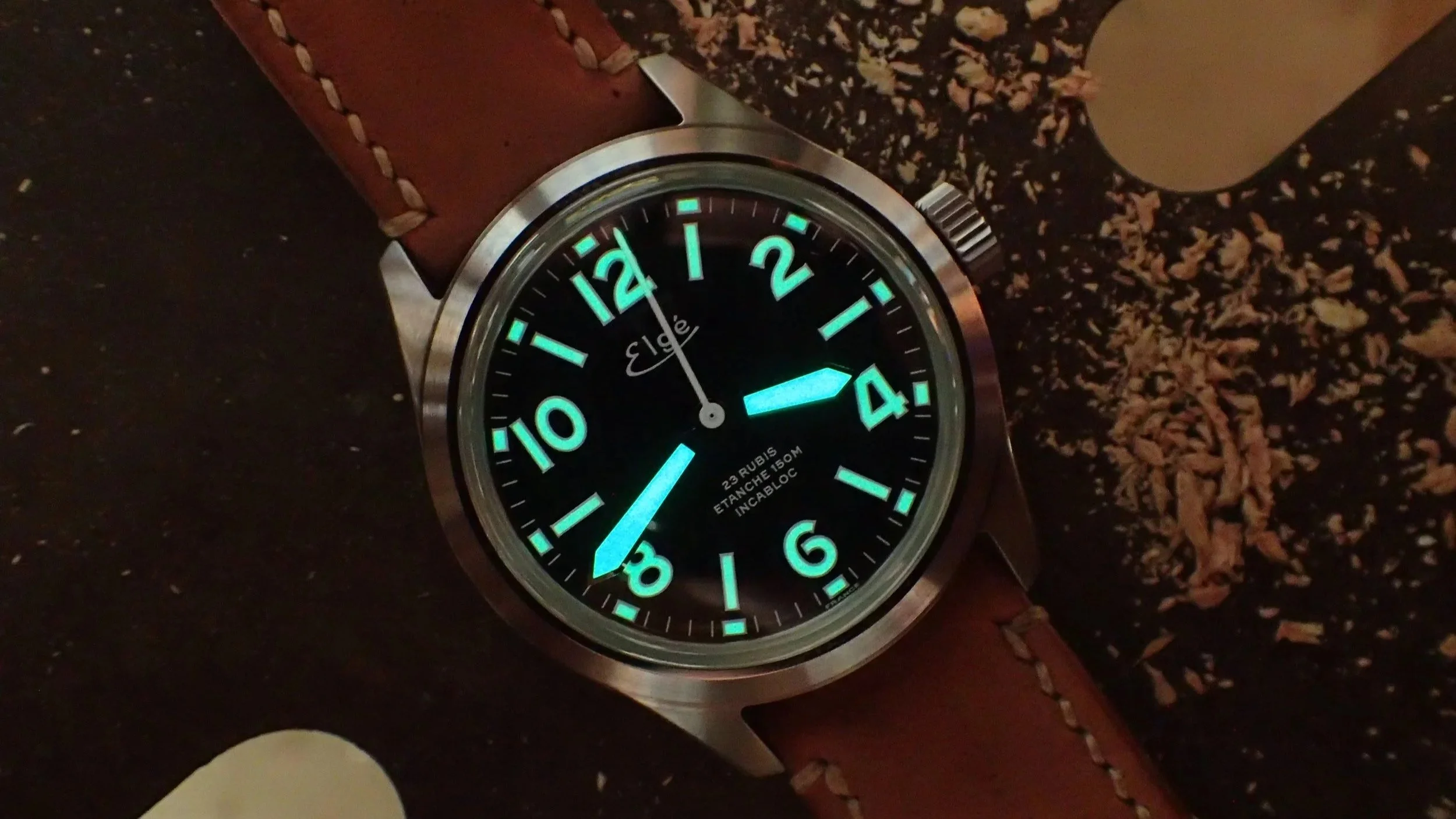
Easy to read, day or night.
The France Ébauche FE Auto.
Sadly, the FE Auto that powers the Chamonix is a let-down. I’m the furthest thing from a movement snob (except I avoid Miyota), and I was genuinely excited to try a new watch with something other than a Sellita or Miyota movement in it. But the FE Auto makes me wish Elgé had just called up Sellita (I’d be thrilled with this watch today) or Miyota (I probably would have resisted and wouldn’t be writing this now). Included with my watch was a little printout from a timing machine showing that the watch was running at +18 sec/day after assembly, which would seem to put it squarely in Seiko 6R territory.
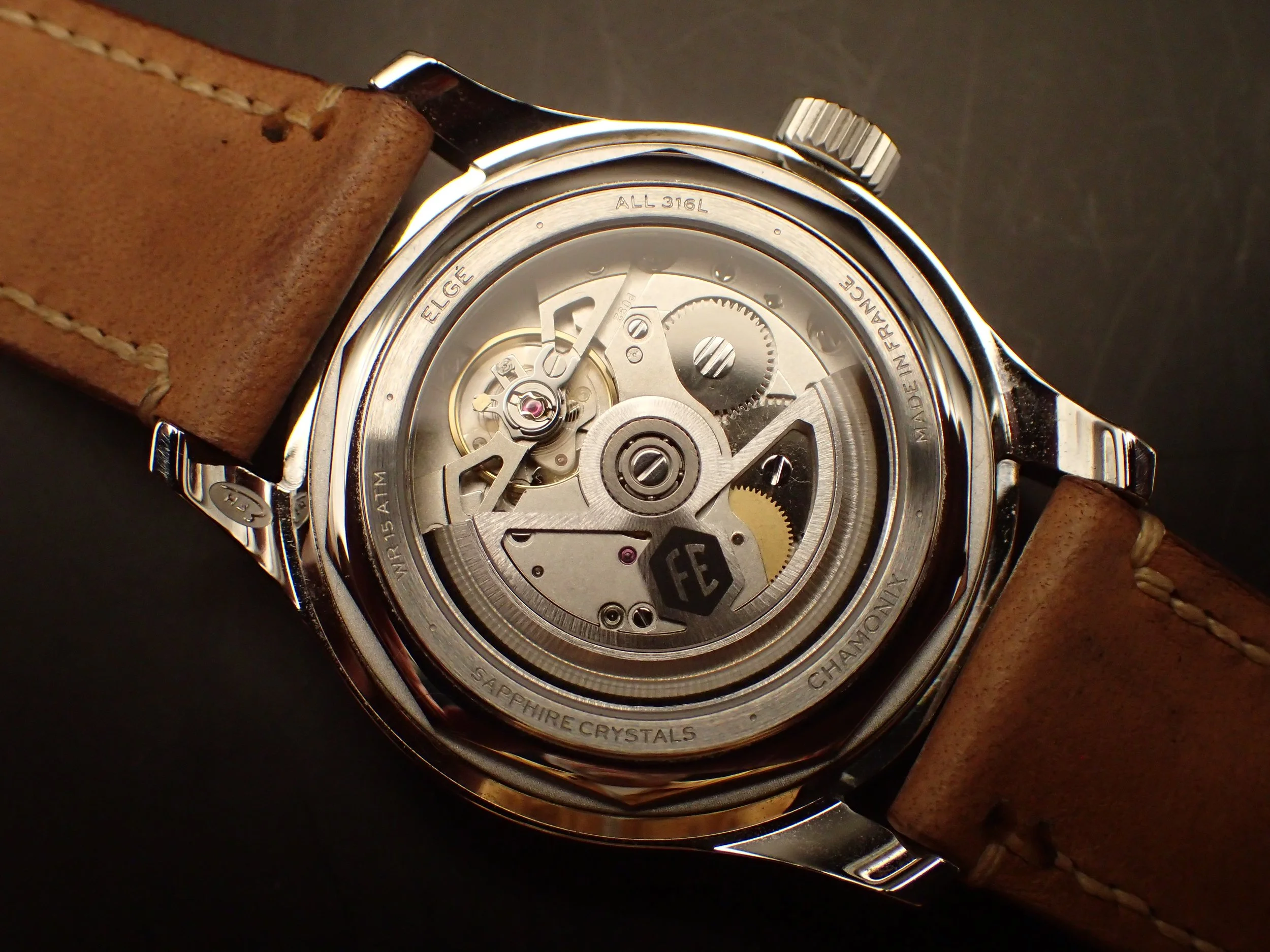
The France Ébauche FE Auto.
Still quite goggle-eyed over the dial and the fatty, funky, lumey hands, and feeling like I needed to plan a climbing trip to the French Alps, and wondering why I’d never owned a French car, and thinking that champagne and brie sounded pretty good for dinner, and given its many other attributes, and did I mention the gorgeous dial?, I convinced myself that I could live with this.
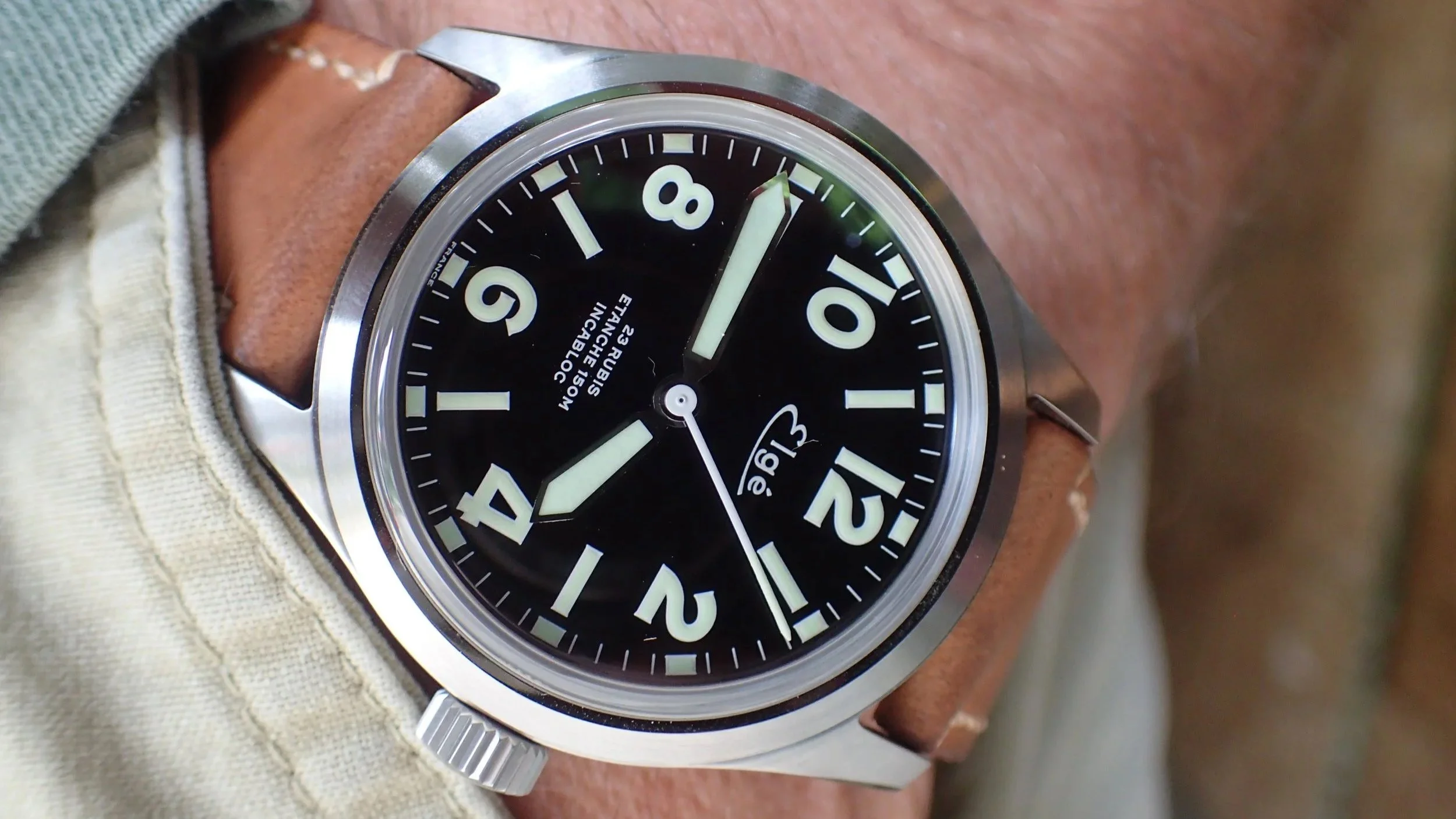
The Chamonix.
So I wound it up and discovered that winding the watch isn’t really what you’d call a tactile pleasure. It’s gritty and sluggish, and feels like the movement is lubricated with used 90-wt. gear oil out of an abandoned 60-year old Land Rover’s differential. No problem; it’s new and it’s an automatic anyway so you shouldn’t expect winding it to be a nirvana-like experience, right? With the watch running, I waited for the sweep hand to get to 60 and pulled the crown out to stop the movement. Hm, did the minute hand just jump about 3 minutes back when I pulled the crown out? No worries, I’ll just reset it and synchronize to my Junghans atomic clock — let’s see, coming up on 60… and, hack. Wait, why did the minute hand just jump ahead a minute and a half? And so it went, attempt after attempt after attempt.
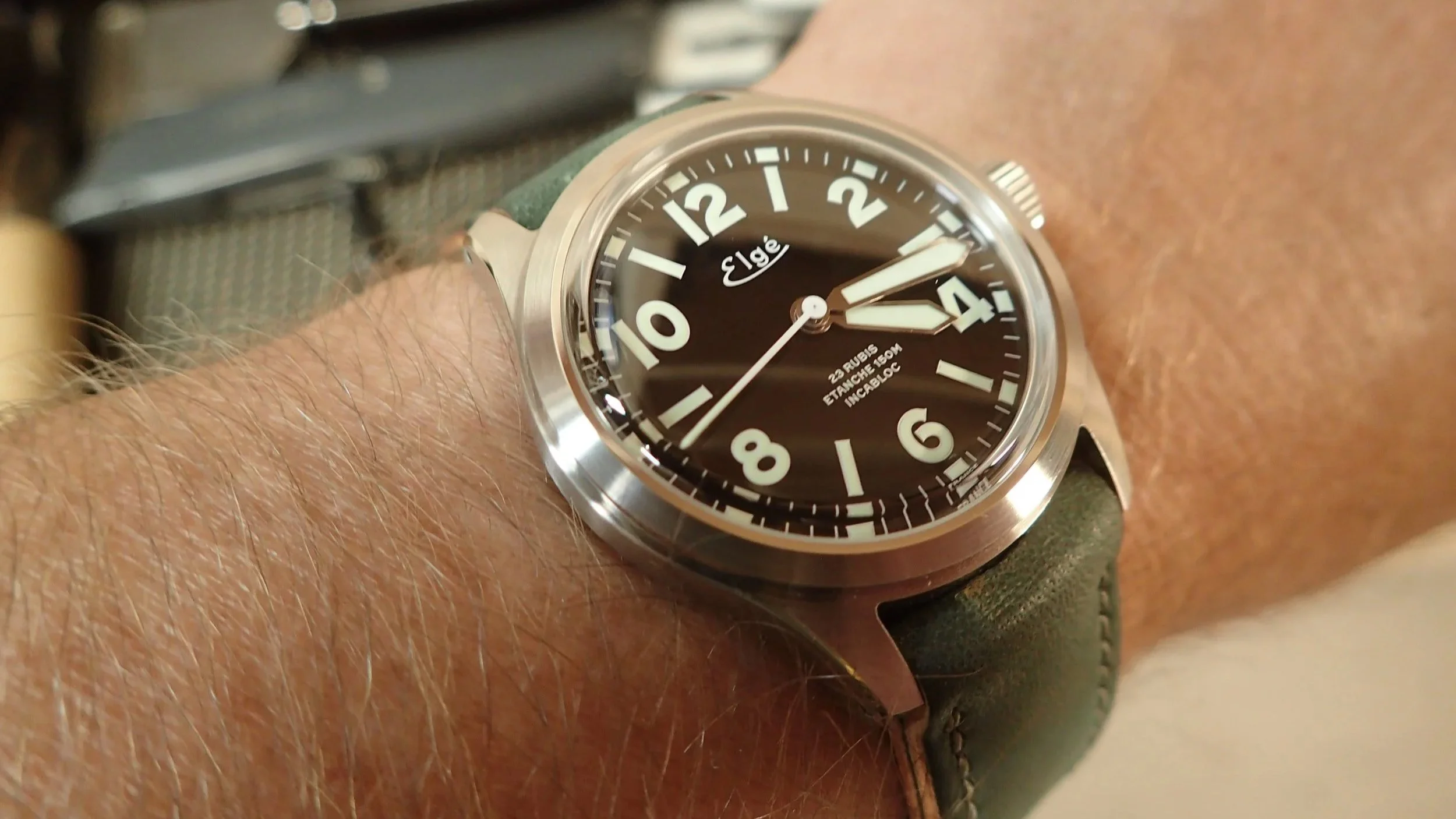
The compact Chamonix, perfect for working at the bench.
Having worn the watch for a few weeks now, I can say that this issue hasn’t gone away with break-in. And unfortunately, it gains so much time that I feel compelled to adjust the time every other day or so. Sometimes, the stem action is crisp and positive, but the minute hand still jumps forward or backwards when the movement is started or stopped. Most often, the stem engages in a mushy, indefinite way, almost like there’s something lodged in the keyless works preventing it from crisply engaging, like some practical joker put a little blob of Silly Putty or something in there. Once, the stem refused to engage far enough to re-start the movement, and I thought the whole thing was toast.
But Here’s the Thing.
I still really like this watch, but I wish I could say I loved it. At around a thousand dollars US, it would be an amazing value if it weren’t for the fact that the movement simply is not ready for primetime. Sure, if I had bought this watch from a US-based dealer, I’d have written them already to let them know of my concerns, and I’d be pushing hard for a replacement watch. But as Elgé doesn’t have a US-based dealer, I ordered it directly from them and can’t really bear the thought of shipping it back to France for their inspection and running the risk of paying yet another making-us-all-great-again tariff upon its return.
You get what you pay for.
So I’ll just keep it and find something else to complain about, like why Fears watches cost so much. But I have to say that I will probably be reaching for my SeaQ when I need a time keeper for travel or a watch to wear all week. Also, I now remember why I don’t have a French car.
Thanks for reading. I love hearing from readers and always welcome comments and factual corrections.