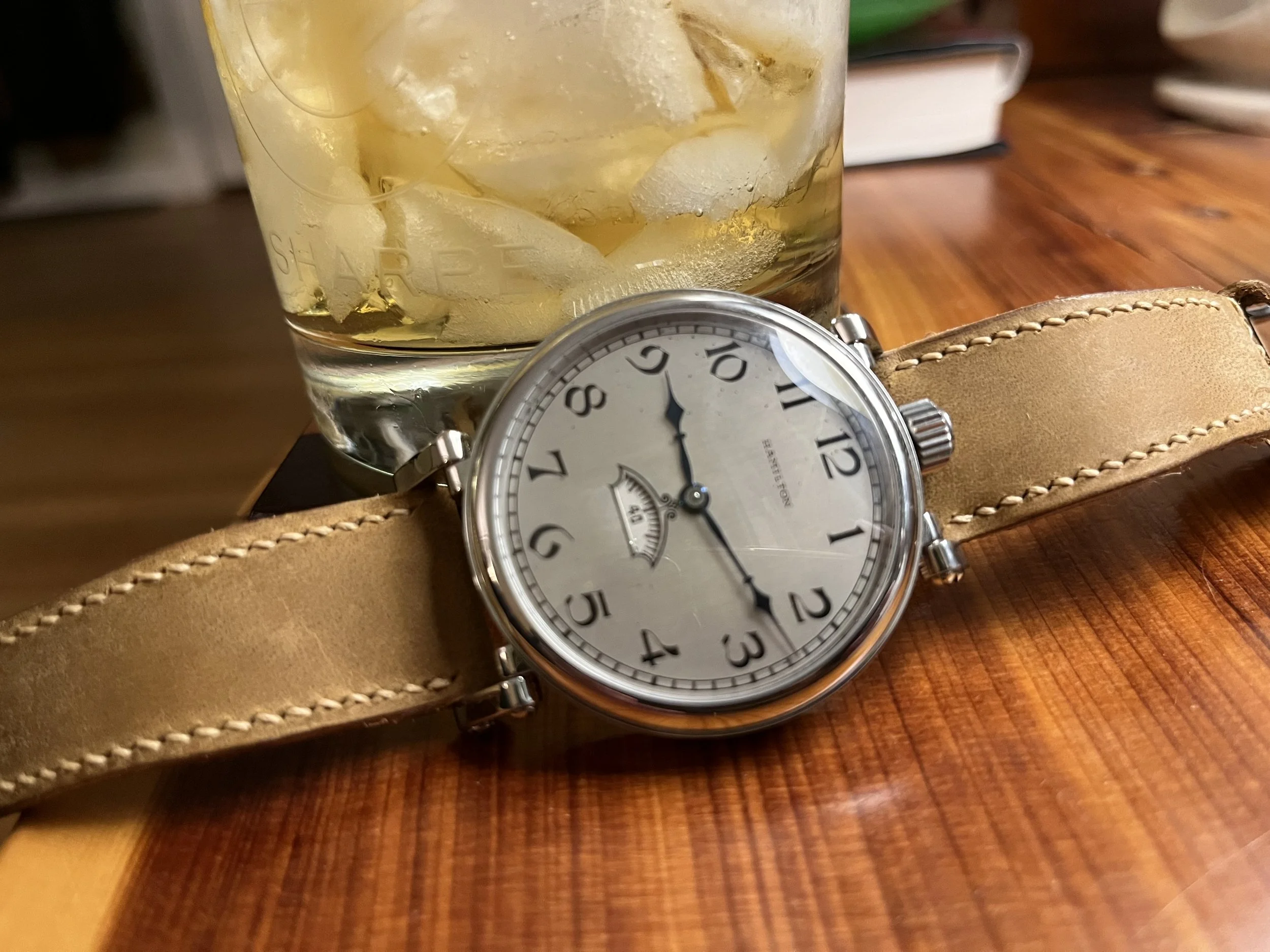
Service it, Wear it, Write it Down: Hamilton Cal. 912 Farragut with Secometer.
Myron Erickson
A Family Heirloom Emerges at Thanksgiving.
Seven years ago, almost to the day, I wrote an article about the importance of keeping family heirloom watches. Keeping them going, keeping them useful, and keeping them relevant. My advice then was: service it, wear it, write it down. Well, last year at Thanksgiving, my long suffering spouse paid a holiday visit to her family in suburban Chicago, a 3-hour drive for us. I would normally have made the trip, but we couldn’t get a dog sitter so we decided to divide and conquer. At some point during her visit she texted me a picture of a pocket watch and asked did I have any interest in it?
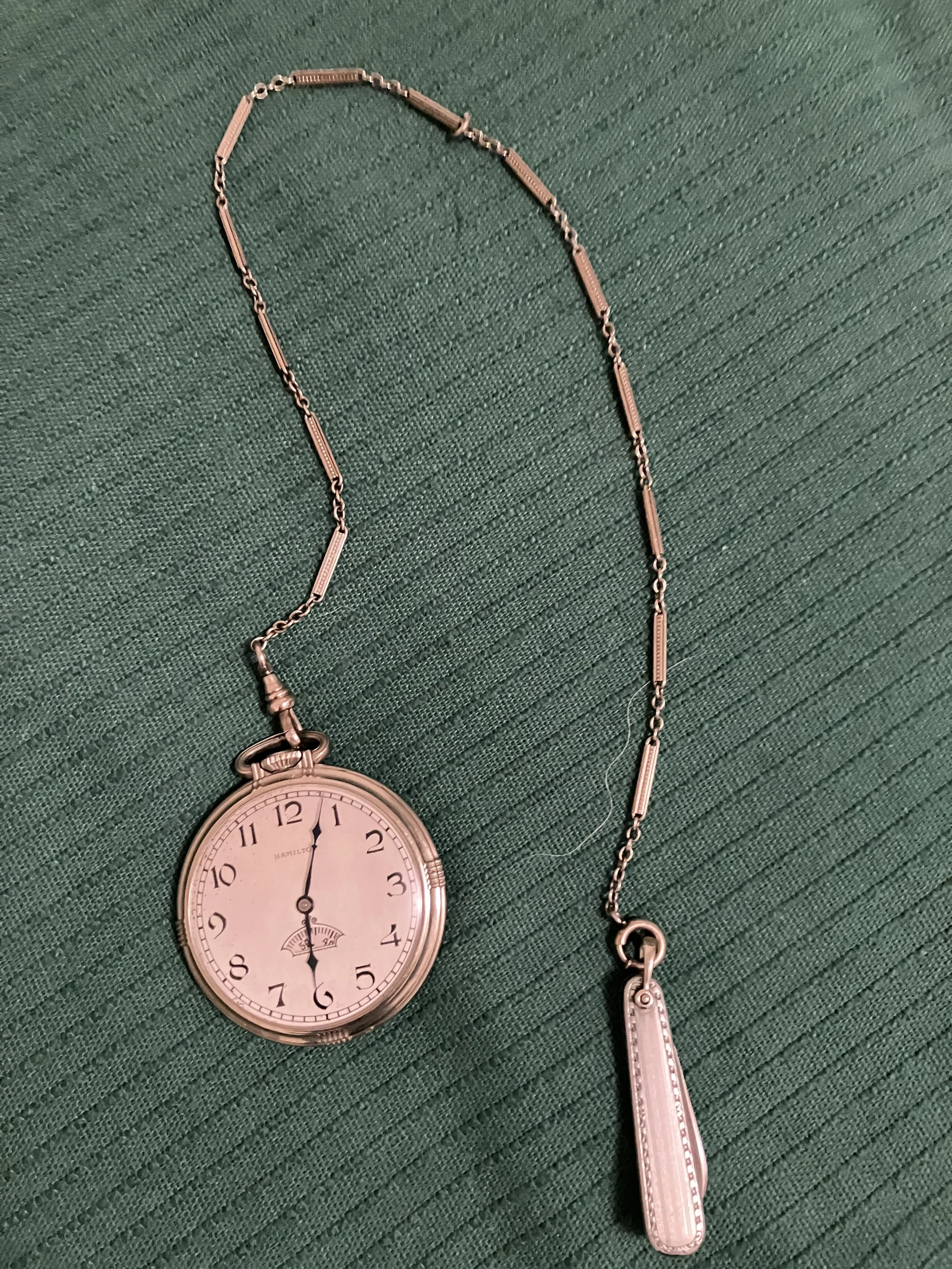
The Hamilton as found in the sock drawer where it had been residing for 50 years.
It was still attached to its pocket chain and pen knife fob, posed against a bed spread that dated to her childhood. I looked at the quick & dirty picture she attached and was immediately intrigued. It appeared to be in mint condition, and the short story was that the watch had belonged to her grandfather, the late Dr. Frank DeRose, DDS.
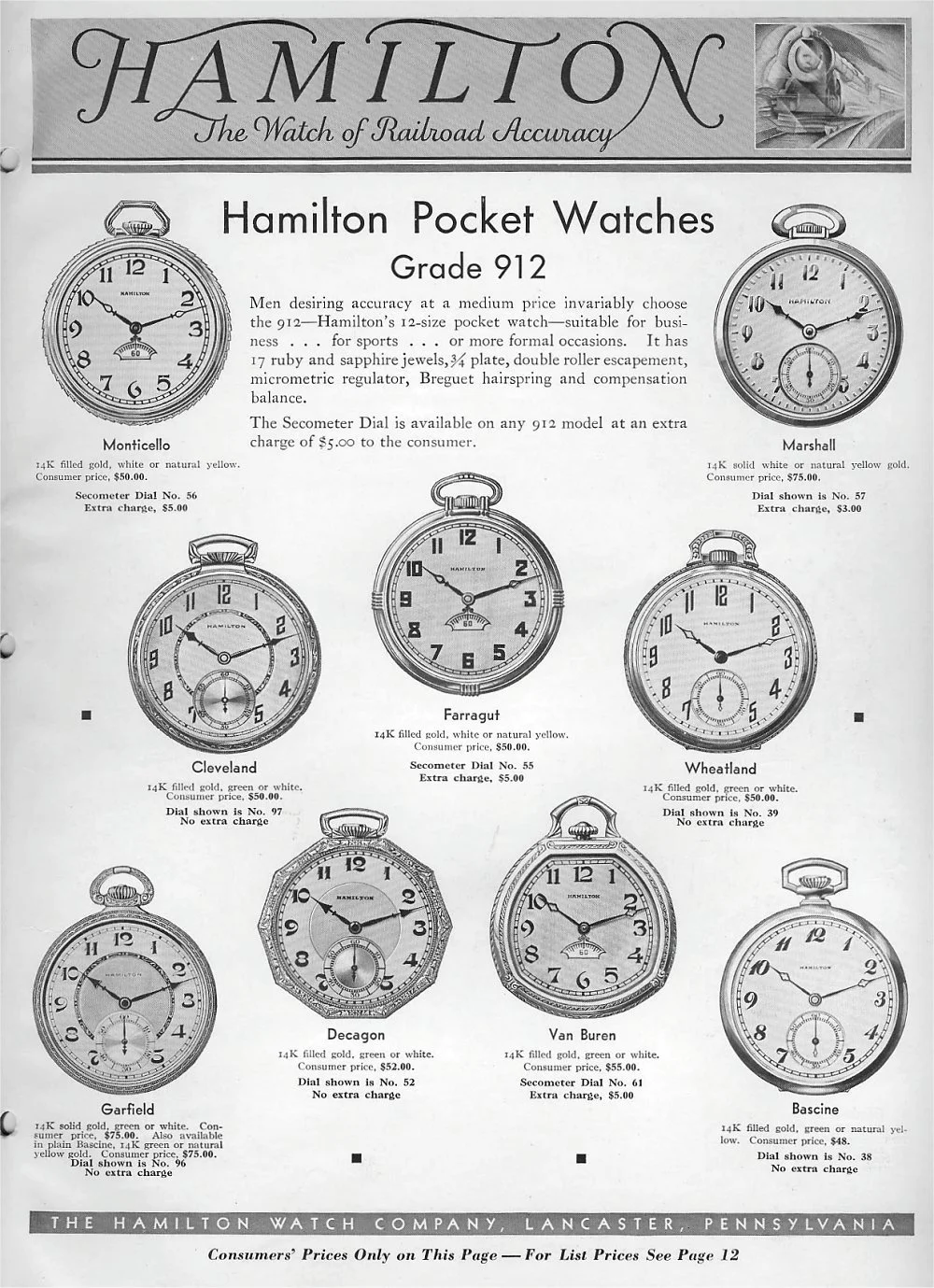
The Farragut case with dial no. 55 (middle row, center). Monticello case (top row, left) shown with dial no. 56.
Frank DeRose, DDS.
Hailing from New Jersey, Frank was a graduate of Calvin College in Grand Rapids, Michigan, and then became a dentist after graduating from New York University in 1938. He later served in the US Army in WWII. The watch had passed to his oldest son (now my father-in-law) upon his death in 1974, whereupon it went into a sock drawer and sat unused and unseen for 50 years. My father-in-law told me he didn’t remember ever seeing his father carry the watch, which would explain its pristine condition.

Frank DeRose, during US Army service in WWII.
Write it Down.
The movement’s serial number dates this watch to the late 1930’s, so my working hypothesis is that this watch was given to Frank as a dental school graduation gift. I was hoping there might be some engravings inside the caseback to support this. Alas, there were none, and no one living is aware of the watch’s origin story. Got an old family watch? Write its story down; some watch nut descendant will thank you someday.
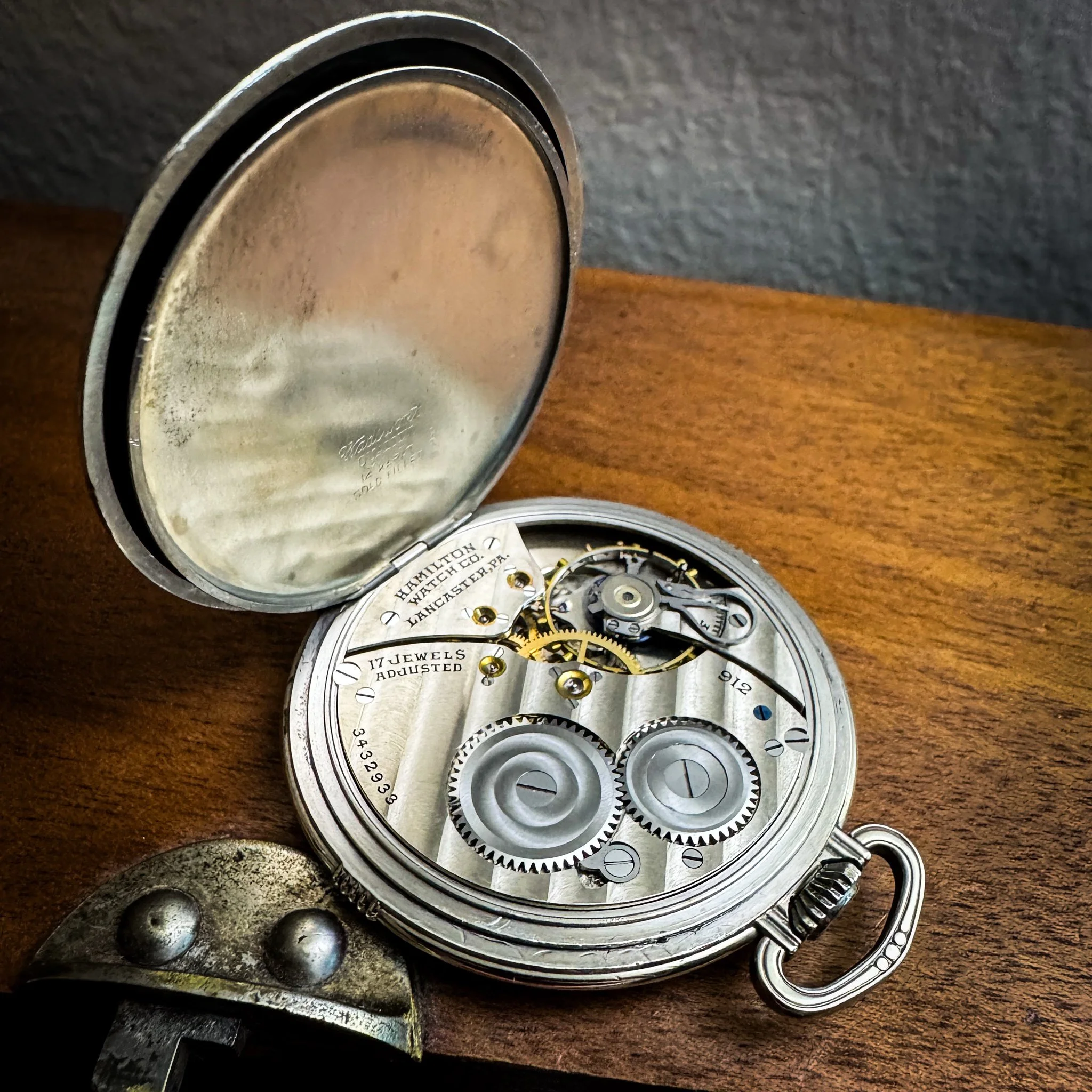
The Hamilton cal. 912, cased in a white gold-filled Farragut pocket watch case. Image compliments of Brendan Frett.
The Hamilton Caliber 912 Farragut.
This lovely timepiece is a Hamilton caliber 912, mated to dial no. 56 with an optional “secometer” complication, and cased in a white gold-filled Farragut case. The secometer complication is a running seconds indicator located just below the center pivot where the hour and minute hands are fastened. Hamilton’s design was considered modern and futuristic at the time and was among the last Art Deco designs Hamilton sold.
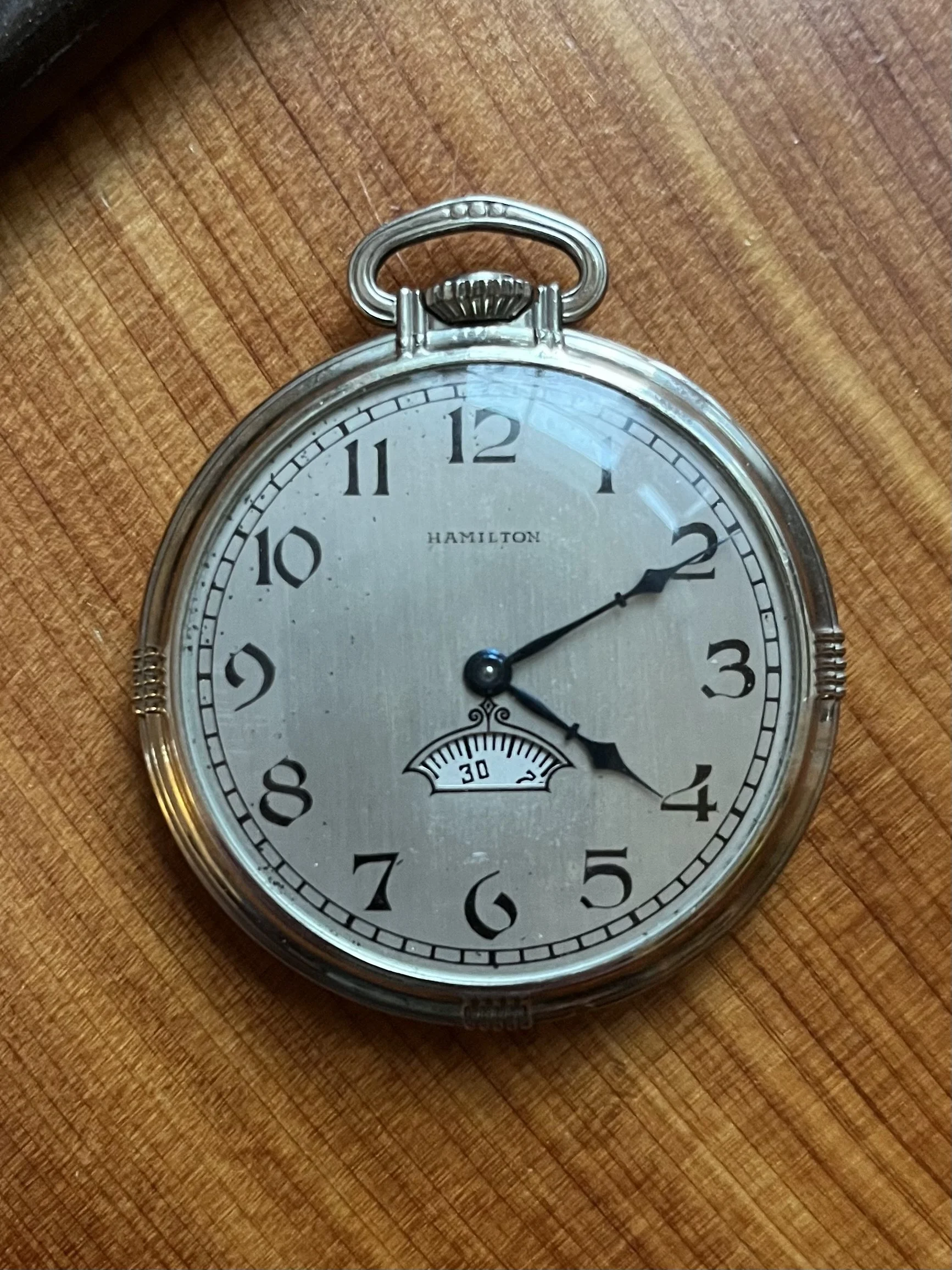
The “secometer” complication as seen on Dial no. 56.
This watch sold for $50 in 1932, with the optional secometer adding an extra $5 to the Hamilton customer’s bill. This is about $1,300 in late-2025 dollars, which, if you think about it, is pretty much what a mid-tier, brand new Hamilton costs today — the 40 mm Intra-Matic three-hander with date comes in at $1225 on Hamilton’s site. And thus we see that Hamilton’s value proposition and uniquely American brand identity (even though it is Swiss Made today) have held over the last 90 years. Thank you, Swatch Group, for retaining this and keeping Hamilton true to its roots.
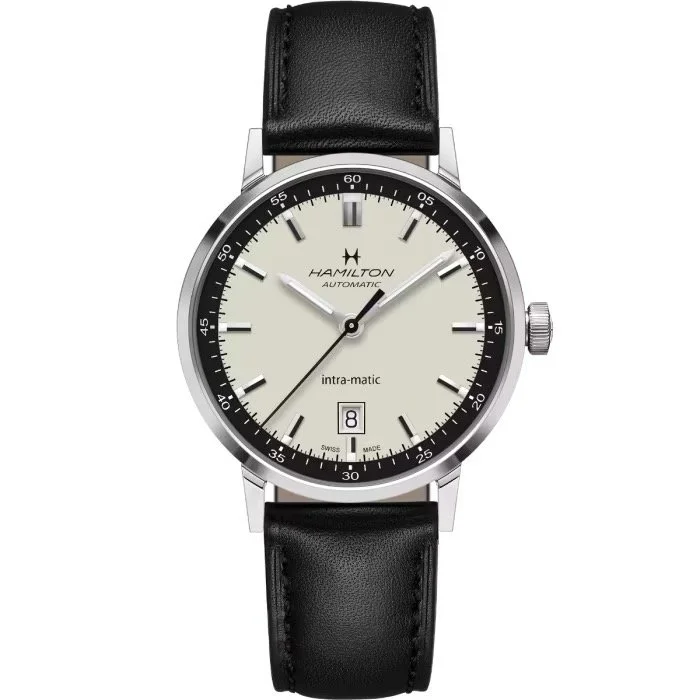
The Intra-Matic Auto. After 90 intervening years, Hamilton still delivers solid value and American style.
Service It.
When my new hand-me-down Farragut arrived home after the holiday, I wound it just enough to see if it would run and was astounded when it not only ran, but appeared to keep good time. Fearing damage from forcing a dry movement to run, I set it aside while I researched watchmakers who specialize in converting pocket watches to wristables, which led me to Brendan Frett of Frett & Co Clockworks.

After servicing and re-casing. Image compliments Brendan Frett.
I sent the watch off to Brendan and in a few weeks it arrived back with me, fully serviced and perfectly converted to a very special wristwatch, ready to wear. I made my own strap for it, although Brendan normally provides a beautiful custom-made strap on the watch for his customers. I cannot recommend his services highly enough.
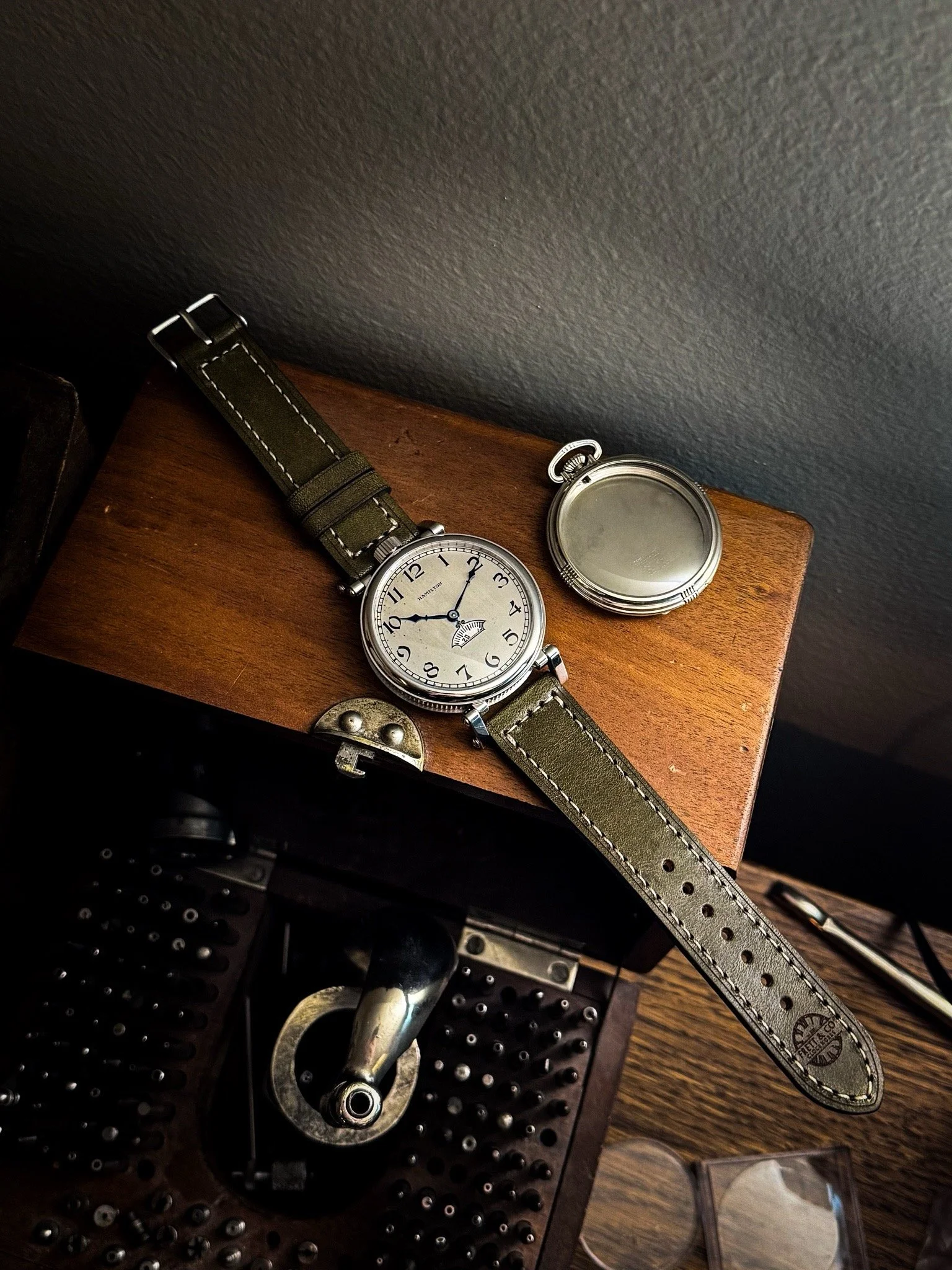
The finished conversion. Image compliments of Brendan Frett.
Wear It.
The finished watch is 45 mm in diameter, 12.5 mm in height, and has a 22 mm lug width. The lugs are of a swiveled, double-jointed variety, which aids in wearing such a large piece. On my 7.5” wrist, the watch is obviously large, but it’s not ungainly or hockey puck-like. It happily hides under my shirt cuff, and thanks to the caliber 912’s robust and high quality construction, and no doubt Brendan’s expert servicing of it, mine keeps near-atomic time, too.
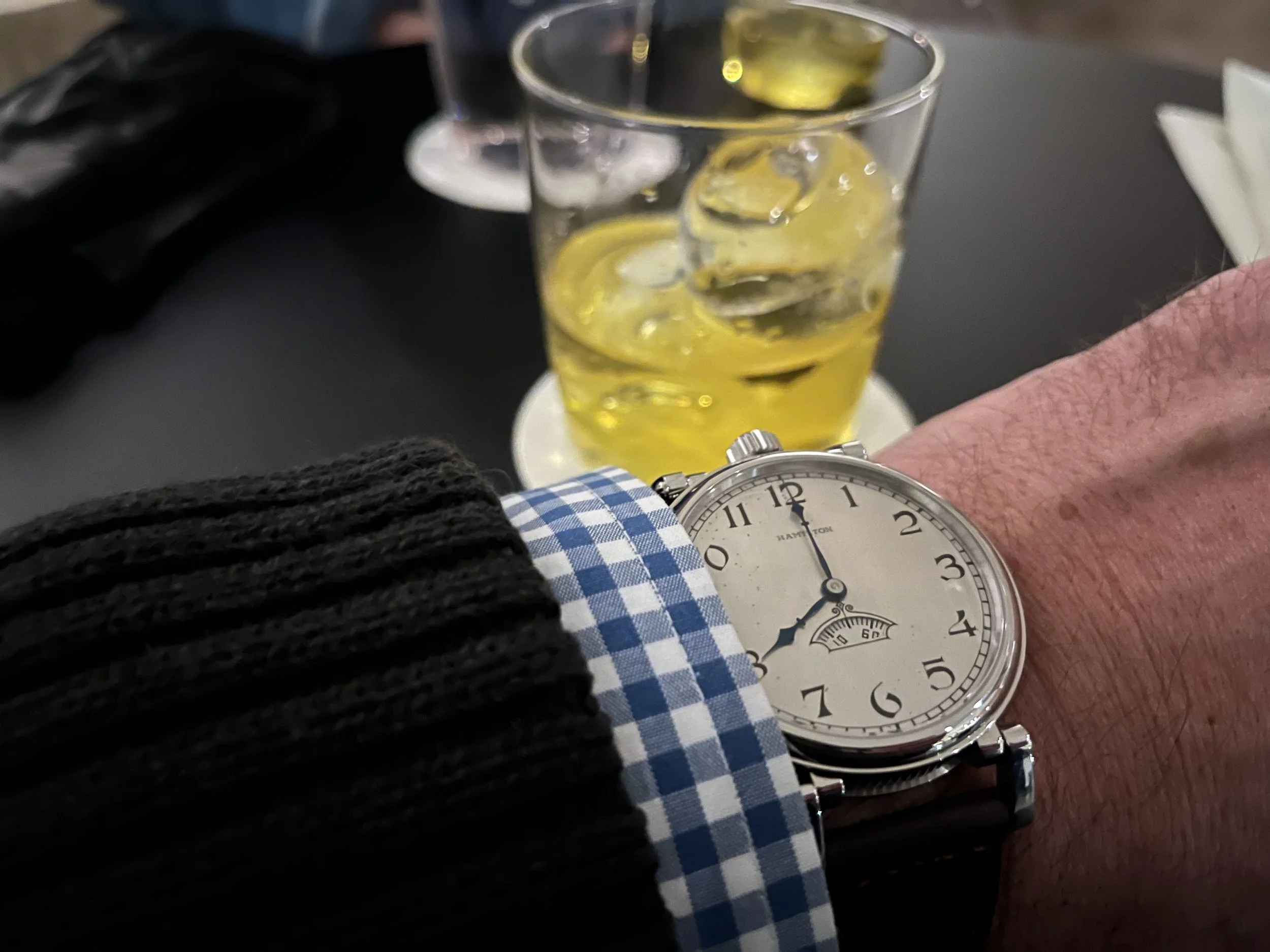
Surprisingly shirt cuff-friendly.
I love wearing my heirloom Hamilton Farragut. It never fails to start a conversation, and converting it has preserved what would otherwise have been an obsolete tool destined for who knows what ignominious fate, making it into a useful and attractive timepiece. It’s not a watch you’ll put on for clearing snow from your driveway, timing a meal on your next camping trip, or pounding on things on your workbench. But when you are out to dinner with friends or family, sitting around the Thanksgiving table, or just quietly sipping your favorite scotch at home, it is the perfect companion.
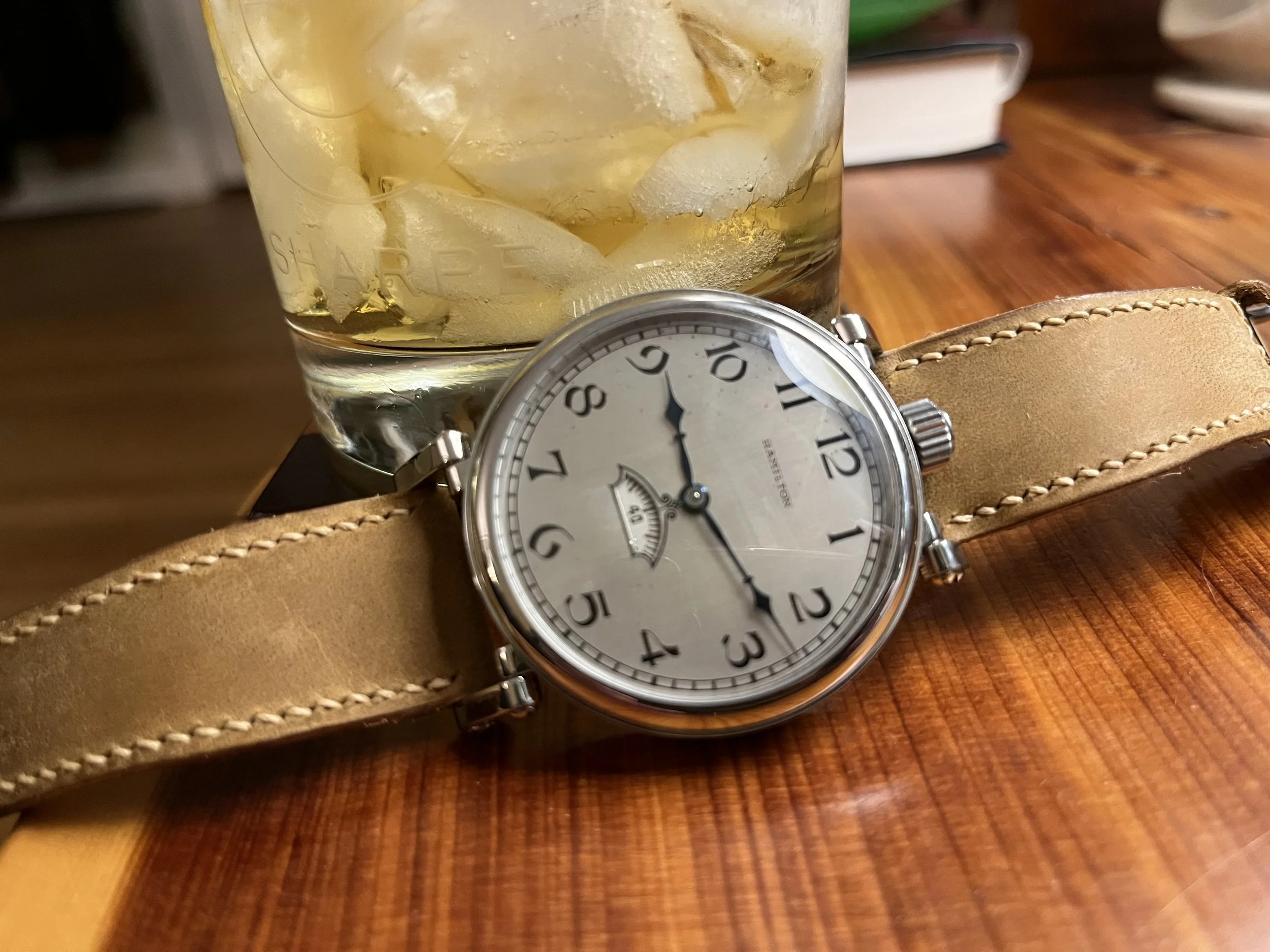
Your classy companion.
Do you have a family heirloom watch? I love hearing from readers and welcome your comments and reflections. Thanks for reading.